Why Cats Love Small Cardboard Boxes More Than Expensive Cat Trees
Why Cats Love Small Cardboard Boxes More Than Expensive Cat Trees
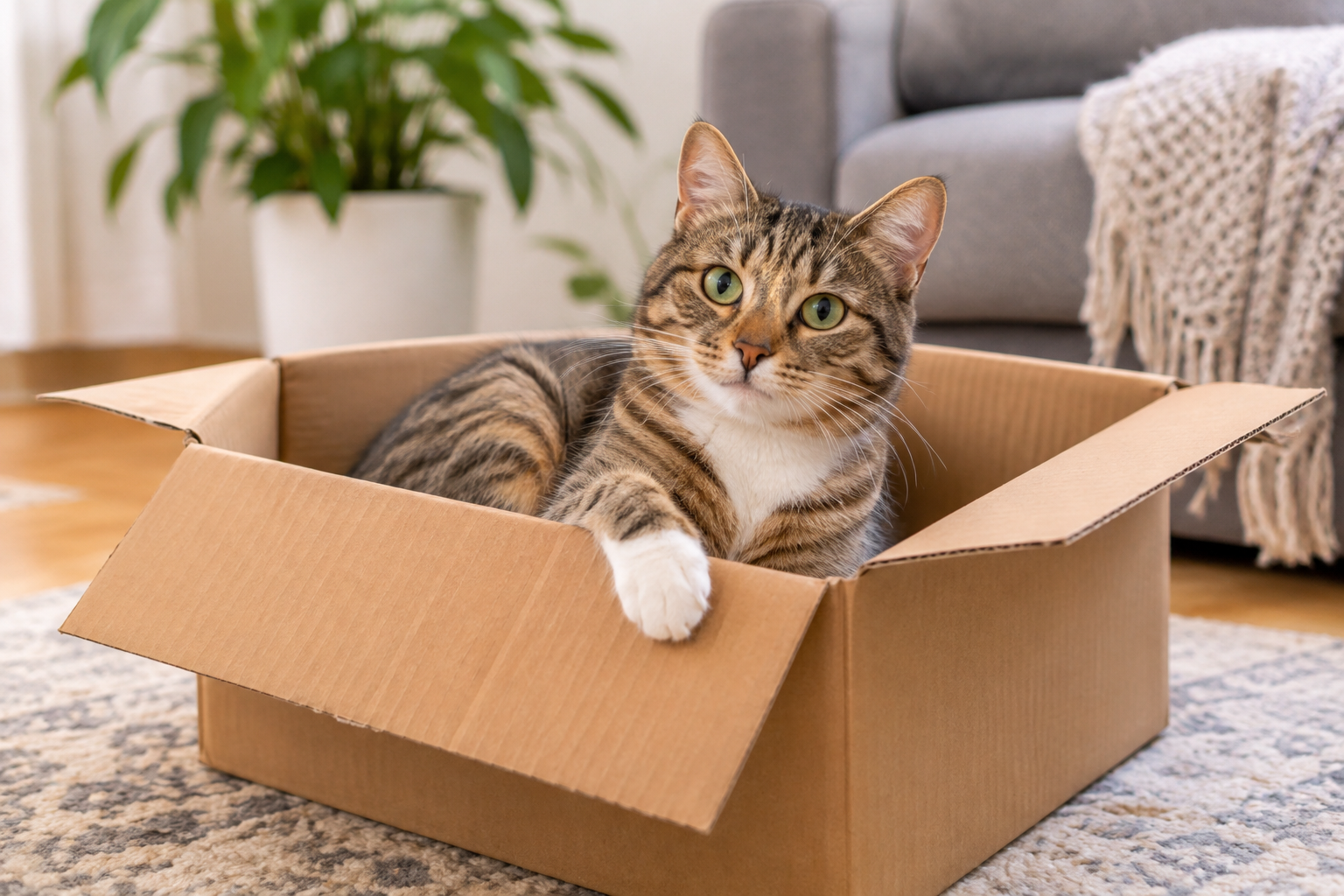
Cat owners can spend hundreds of dollars on elaborate climbing towers, scratching posts and luxury pet furniture, only to discover that their feline companion is far more interested in an ordinary cardboard box. It may seem like a strange preference, but there are good behavioral reasons why cats are naturally drawn to small, enclosed spaces.
A simple box can provide something that even an expensive cat tree cannot always offer: a quiet, enclosed place where a cat can observe its surroundings while feeling protected.
And for many cats, that combination makes an ordinary delivery box surprisingly appealing.
Why a Small Box Makes Cats Feel Safe
Cats are both predators and potential prey in the wild. Although domestic cats live in much safer environments, many of their natural instincts remain.
An enclosed space offers a sense of protection because it limits the number of directions from which another animal or unexpected movement could approach. With fewer sides to watch, a cat can relax more easily.
This is one reason cats often choose cardboard boxes, storage baskets and other small hiding places when they want to rest.
A box also gives them a familiar boundary around their body. Rather than sleeping in the middle of an open room, they can settle into a space that feels more sheltered.
Boxes Give Cats a Place to Escape Everyday Stress
A busy household can be surprisingly stimulating for a cat. Visitors, children, unfamiliar sounds and changes in routine can all make an animal feel uncomfortable.
A cardboard box can become a convenient retreat.
Research published in 2014 in the journal Applied Animal Behaviour Science examined the effects of hiding boxes on cats entering an animal shelter. The researchers found that cats given access to hiding boxes adapted more quickly to their new surroundings than those without them.
The study involved shelter cats rather than every possible domestic situation, but it provides useful evidence that access to hiding spaces can support feline wellbeing.
For a household cat, a quiet box may serve a similar purpose: somewhere to withdraw when the environment becomes overwhelming.
The Hunting Instinct Is Another Reason Cats Love Boxes
A box is not just a sleeping place. It can also become an improvised hiding spot during play.
Cats naturally enjoy watching, stalking and pouncing on moving objects. An enclosed cardboard space gives them an opportunity to observe a toy, a moving foot or another pet without immediately revealing themselves.
This behavior reflects their instinctive hunting sequence: watch, wait, approach and strike.
That is why some cats spend several minutes sitting inside a box before suddenly jumping out to chase something.
Even when there is no real prey involved, this type of play can provide mental stimulation and help prevent boredom.
Why Cardboard Can Be More Appealing Than Expensive Cat Furniture
Cat trees are designed to satisfy several needs, including climbing, scratching, resting and observing the environment from an elevated position.
However, they do not automatically provide the enclosed feeling that some cats prefer.
A cardboard box offers a different experience. It is inexpensive, easy to move and can be replaced when it becomes worn or damaged.
Some cats also enjoy scratching, biting or exploring cardboard, making it an interesting object beyond its function as a hiding place.
That does not mean cat trees are unnecessary. Many cats benefit from vertical spaces, scratching surfaces and elevated resting areas. A box simply offers another form of enrichment.
How to Choose a Safe Box for Your Cat
Not every cardboard box is suitable for feline play. Owners should choose one that allows their cat to enter, turn around and leave without difficulty.
A few simple precautions can make the experience safer:
- Choose clean, dry cardboard without strong odors.
- Remove staples, adhesive tape, plastic handles and loose packaging materials.
- Make sure there are no sharp edges or exposed fasteners.
- Provide an opening large enough for the cat to enter and exit comfortably.
- Avoid boxes that are so small that the animal could become trapped.
- Replace cardboard that becomes wet, heavily damaged or contaminated.
It is also worth supervising cats that chew or swallow pieces of cardboard, since ingesting packaging material can create health problems.
Make an Ordinary Box More Interesting
Owners do not need expensive accessories to turn a cardboard box into an engaging play area.
A familiar blanket can make the inside more comfortable, while a favorite toy placed nearby may encourage exploration. Some cats also enjoy boxes with more than one opening, allowing them to move in and out during play.
The important thing is to let the cat decide whether it wants to use the box. Never force an animal into an enclosed space.
Does Your Cat Still Need a Cat Tree?
Absolutely. A cardboard box and a cat tree serve different purposes.
A suitable cat tree gives cats opportunities to climb, stretch, scratch and observe their surroundings from above. These activities are particularly valuable for indoor cats that have limited access to outdoor environments.
A box, meanwhile, provides an enclosed hiding place and an inexpensive opportunity for exploration.
Combining the two can create a more varied environment without requiring owners to spend a fortune on additional furniture.
Sometimes, the Simplest Things Are the Most Interesting
The next time your cat ignores an expensive piece of furniture and settles inside an empty delivery box, there may be more behind that decision than simple curiosity.
Small enclosed spaces can offer security, opportunities for play and a comfortable place to retreat.
A cardboard box will never replace every function of a proper cat tree, but it can provide something many cats clearly appreciate: a space of their own.
And sometimes, that is all they were looking for.
Related stories
They poured a can of Sprite, baking soda and hot water down the drain: the clog came out in one piece
Baber Siddiqui · · 2 min read

Orange Peels in Vinegar: The Cheap Cleaner Everyone Is Making
Baber Siddiqui · · 3 min read
A Curious Fungus on a Fallen Spruce: Meet Gloeophyllum sepiarium
A rusty-gilled wood-decay fungus turning a fallen spruce into a small world of color, texture, and decay.
Dop Denis Constantin · · 1 min read