Orange Peels in Vinegar: The Cheap Cleaner Everyone Is Making
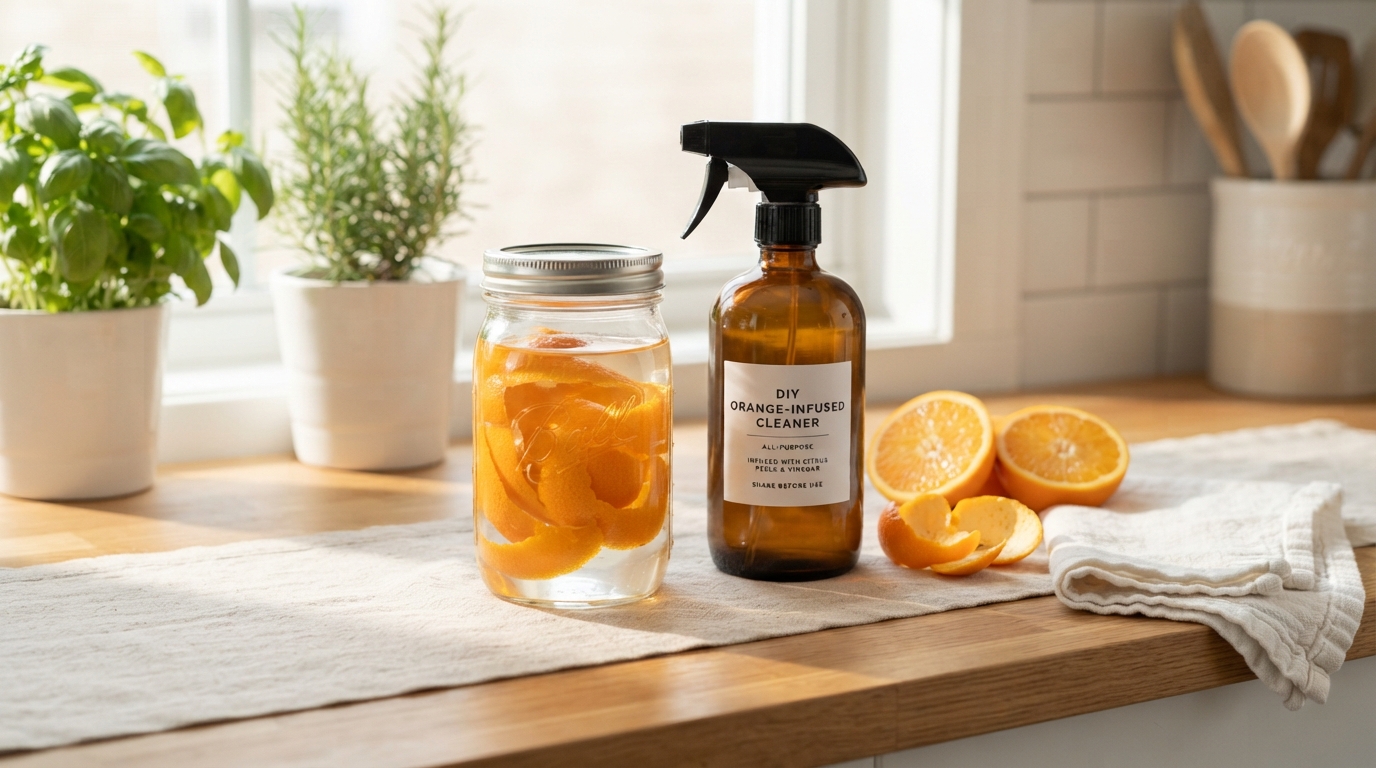
Most orange peels end up in the trash. Instead, a homemade method is making the rounds: put them in a jar, cover them with white vinegar, and wait. After a couple of weeks, you get a citrus-scented cleaner for almost nothing. Here is what it is for, how long it actually needs to sit, and where you shouldn't spray it.
In Short
- The peels are soaked in white vinegar to make a citrus-scented homemade all-purpose cleaner.
- The University of Florida's version: peels from four oranges in a one-quart (one-liter) jar for about one week.
- It is useful for light grease and everyday grime on ceramic tile and other acid-resistant surfaces.
- It is not a disinfectant and can damage marble, granite, and other natural stone.
The same thin tile, installed vertically: the change specialists recommend to make your kitchen look taller
What It Is For
The version circulating on the Brazilian site Tupi FM leaves the peels in vinegar for two weeks. The idea is to turn a kitchen scrap into a useful cleaner. El Cronista describes the result as an all-purpose cleaner for everyday household surfaces that helps cut through light grease, common dirt, and certain odors while leaving behind a citrus scent.
The recipe is more than just a social media trend. The University of Florida, Institute of Food and Agricultural Sciences, lists it as an "All-Purpose Cleaner" in its fact sheet on homemade household cleaners: "Put the peels of four oranges in a one-quart jar and top off with white vinegar."
How to Make It
- Save the peels from four oranges and place them in a clean one-liter glass jar.
- Fill the jar with white vinegar until the peels are covered.
- Seal it and wait. UF/IFAS says to "let the product sit for about a week." The viral version extends this to two weeks.
- Strain the liquid into a spray bottle and compost or discard the peels.
- Label the bottle. "If you make your own cleaner, always label it," the fact sheet says, and "never put cleaners in food containers."
'Christmas Cactus' might actually be a Thanksgiving Cactus: The leaf detail that sets them apart
Where to Use It
El Cronista lists ceramic tile, certain kitchen countertops, and other washable surfaces that can withstand acid. It is well-suited for tasks that pop up before the holidays: a greasy backsplash, the tile near the stove, or the inside of a trash can. Before spraying an entire surface, test a small, hidden spot first.
For the same peels in a different role, you can simmer orange peels with cinnamon for a home that smells like the holidays, or mix banana peels with baking soda for a gentle scrub.
The Limitations
Vinegar is an acid, and El Cronista warns against using the mixture on marble, granite, natural stone, terrazzo, unsealed wood, waxed surfaces, and delicate finishes. It is also not a disinfectant: for sanitizing, the University of Florida provides separate instructions with diluted bleach.
Never combine the two. "Mixing bleach with ammonia or vinegar will create toxic gases that are very dangerous to your lungs and breathing," the fact sheet warns. Keep the bottle out of reach of children and only make as much as you will use.
Vinegar also has other small uses around the house, such as what happens when you spray it on keyboard keys.
Four oranges, one jar, and a week or two of patience. That is the whole trick.
The article Orange peels in vinegar for two weeks: what it is for and why so many people are making it first appeared on TheCoolist.
SEO Tags: natural cleaner, orange peels, homemade vinegar cleaner
Related stories
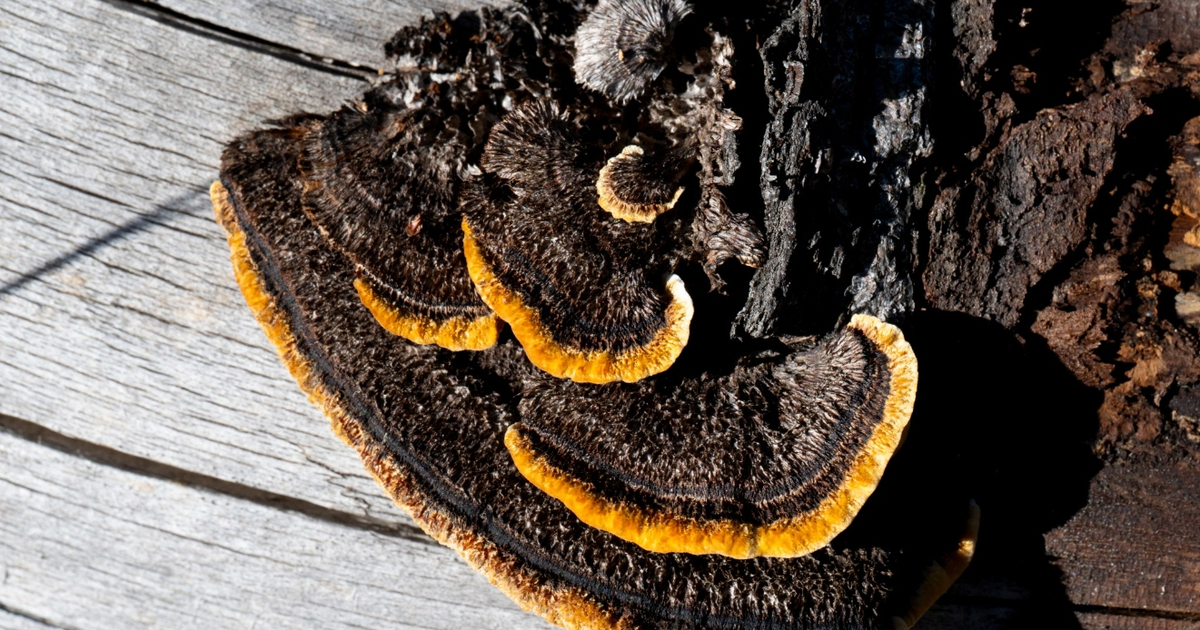
A Curious Fungus on a Fallen Spruce: Meet Gloeophyllum sepiarium
A rusty-gilled wood-decay fungus turning a fallen spruce into a small world of color, texture, and decay.
Dop Denis Constantin · · 1 min read

The Tree Pipit Captured in Stunning Photos by Peter Lengyel on the Igniș Plateau
Dop Denis Constantin · · 1 min read

Myth or Fact: Does Chicken Soup Really Help When You Have a Cold?
Studies suggest hot chicken soup can briefly ease a stuffy nose and may have a mild anti-inflammatory effect. It won't cure a cold, but it can help you feel better.
James Okafor · · 6 min read