The First Fully AI-Generated Movie Just Hit Screens. Audiences Hate It
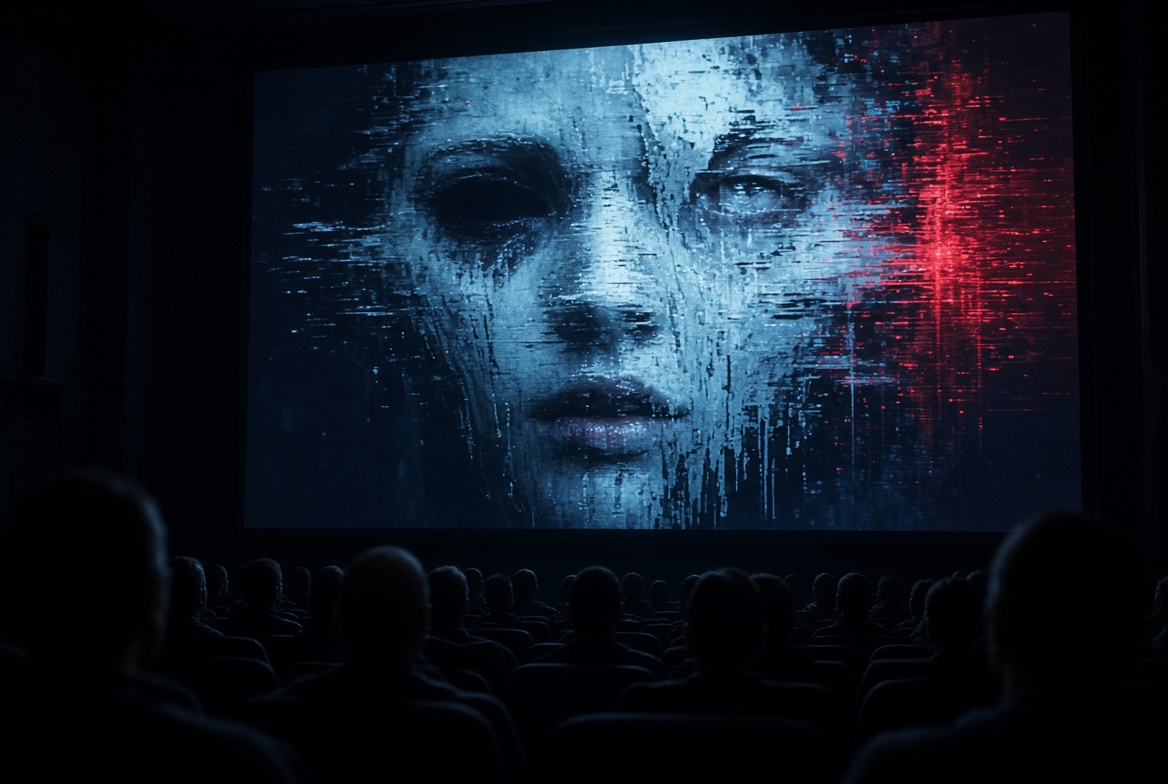
Moviegoers have swallowed a lot over the years: pointless remakes, cheap CGI that looks like gray jelly, and scripts written between coffee breaks. But the first fully AI-generated movie didn’t get skepticism. It got pure anger.
Not even Cats received this level of focused hate.
Faces Melt, Fingers Multiply
The promise was simple: no more $200 million budgets, no expensive cameras, no actors. Just type a prompt and get a film.
What actually appeared on screen was visual nonsense. Characters blink at random, grow extra teeth mid-sentence, and walk like they’re floating on invisible rollers. Hands still glitch — six fingers, thumbs on the wrong side. The eyes are dead. There’s no micro-expression, no real emotion, just a stiff mask with skin texture pasted on top.
Dialogue That Sounds Like a Corporate Brochure
The visuals are only half the problem. The script is worse.
Large language models predict the most likely next word. The result is perfect mediocrity. Characters explain their trauma like they’re reading a washing machine manual. No subtext. No real pauses. No actual tension.
One critic wrote: “It’s the first love story where the chemistry between the leads feels like two refrigerators in a store.”
It’s Not Just a Bad Movie — It Feels Like an Insult
The anger isn’t only about quality. It comes from the recent writers’ and actors’ strikes. People see this as recycled work taken from thousands of cinematographers, directors, and artists who got zero credit and zero money.
Audiences refused to treat it as a cute tech experiment. The message was clear:
- Every frame was built by digesting other people’s unpaid labor.
- Charging money for something a server spit out in minutes feels disrespectful.
- When everything looks like an Instagram filter mixed with a perfume ad, the magic disappears.
What the AI Promoters Still Don’t Get
Cinema lives in human mistakes — an actor forgetting a line and improvising something better, a tired cameraman choosing a weird angle after 14 hours in the rain. Cold perfection isn’t art.
AI can be useful in post-production or for complex VFX. But the moment you remove the director, the actors, and the writer just to save money, you’re not making a film anymore. You’re making expensive noise.
The audience already delivered the verdict: studios can keep pouring billions into video generators, but until algorithms can feel shame, fear, or real passion, these AI-generated movies will stay exactly what they are right now — creepy tech demos that almost nobody wants to watch twice.
Would you ever pay for a ticket to a movie written and performed entirely by algorithms? Or should this whole experiment be buried? Drop your take below.