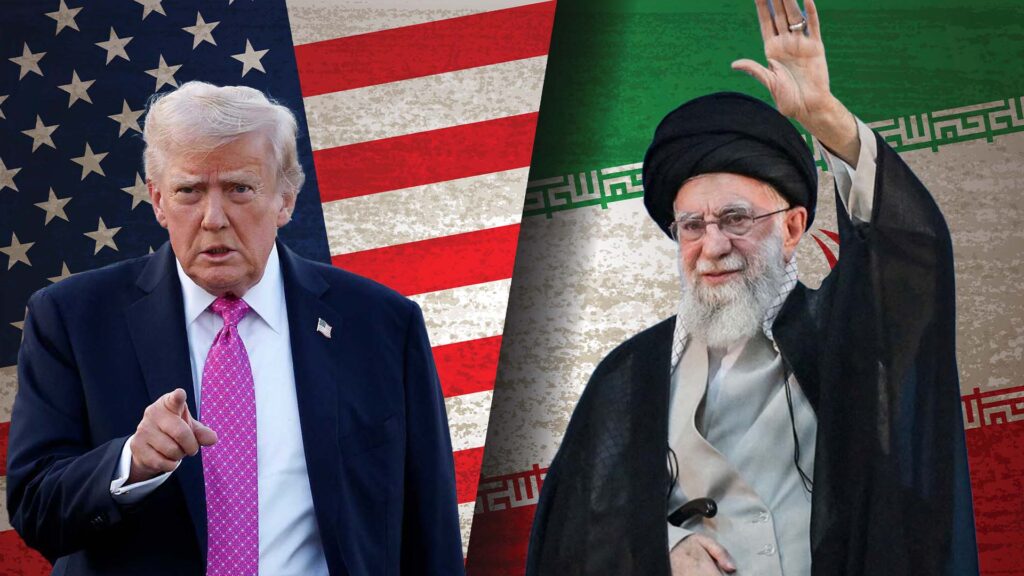
The Iran-US tensions in early 2026 have escalated dramatically, driven by a large-scale U.S. naval deployment and a firm Iranian response rejecting negotiations under pressure. You are now facing a geopolitical environment fraught with risks, diplomatic brinkmanship, and strategic signalling that could shape Middle East stability for months to come.
The Iran-US tensions have intensified as the United States reinforces its military posture in the Middle East with additional warships and aircraft carriers deployed within striking distance of Iran. Tehran has responded with unequivocal warnings and firm rejection of talks conducted under military threats. This evolving crisis reflects deeper disagreements over Iran’s nuclear programme, its regional influence, and Washington’s strategic objectives. As you read on, you will gain a detailed, fact-based picture of the forces at play and the current status of this geopolitical standoff. Underlying the situation are not just military postures, but the diplomatic efforts and regional concerns that influence both capitals’ decision-making.
u.S. naval buildup in the Middle East
To understand why Iran-US tensions are rising, you first need to look at the recent American military deployments. In late January 2026, the United States sent additional warships—including the USS Delbert D. Black guided-missile destroyer and the USS Abraham Lincoln aircraft carrier strike group—into the Middle East amid heightened friction with Tehran.
This reinforcement significantly increases the U.S. naval presence in the region. According to defence sources, multiple guided-missile destroyers, littoral combat ships, and a nuclear-powered aircraft carrier are now operating within the U.S. Central Command’s area of responsibility, illustrating a step-up in U.S. military readiness.
The strategic message from Washington, including remarks by the U.S. president and Pentagon officials, emphasises deterrence while keeping the door open for diplomacy. In public statements, U.S. leadership has spoken of hoping for negotiations but has also warned Tehran of potential military options if its nuclear ambitions continue unchecked.
The deployment isn’t limited to naval forces. Fighter jets, missile defence assets, and logistical support elements have also been positioned to reinforce American force projection and defensive capabilities. This posture underscores how seriously the U.S. government views the escalating tensions with Iran.
Iran’s firm response and diplomatic stance
In response to the growing American military presence, Iranian authorities have made clear that they reject negotiations under military pressure. Iran’s foreign minister stated that diplomacy cannot occur “in an atmosphere of threats” and insisted that any talks must be based on fairness and respect for Iran’s sovereignty and defence capabilities.
Tehran has also announced plans for live-fire naval drills in the Strait of Hormuz, a strategic chokepoint critical to global energy supplies. Such exercises are widely interpreted as both a military preparedness measure and a form of political signalling aimed at showing Tehran’s willingness to defend its interests.
Crucially, Iran’s leaders have articulated readiness for either diplomacy or conflict. While they have reiterated openness to equitable dialogue under the right conditions, they have firmly rejected discussions that involve compromising their defence capabilities or succumbing to coercive demands.
broader regional dynamics and consequences
The Iran-US tensions are not confined to a simple bilateral dispute. Regional actors, such as Turkey and the United Arab Emirates, are actively engaged in diplomatic efforts to prevent escalation. While some states have offered to mediate, others have taken cautious positions regarding the use of their territory or airspace for potential military operations.
The situation also reverberates beyond politics and military deployments. International markets have reacted to the instability, particularly in the energy sector, given that roughly one-fifth of the world’s oil supply transits the Gulf region. Even the perception of disruption or conflict can trigger price volatility, affecting global economic conditions and investor confidence.
Moreover, European allies have joined the diplomatic fray. The European Union formally designated Iran’s Islamic Revolutionary Guard Corps as a terrorist organisation, a move that adds legal and political pressure on Tehran while underscoring broader international concern over the country’s human rights record and regional behaviour.
informed perspective on what comes next
As you follow the unfolding Iran-US tensions, it’s essential to recognise that this is a complex and fluid crisis. The current situation involves a delicate balance between deterrence and diplomacy, with both sides signalling resolve while leaving open limited channels for negotiation. The deployment of U.S. naval forces reflects a strategy aimed at applying pressure while deterring conflict, whereas Iran’s public stance emphasises sovereignty and resistance to external coercion.
In practical terms, the risk of direct military confrontation remains significant but not imminent. What you are witnessing is a geopolitical standoff in which both capitals are wary of miscalculations that could lead to unintended escalation. Until there is a shift in diplomatic engagement or a change in strategic calculus, heightened military readiness and political brinkmanship are likely to persist.